MY JOURNEY IS THE SEARCH TO LIVE IN THE BEST WAY POSSIBLE
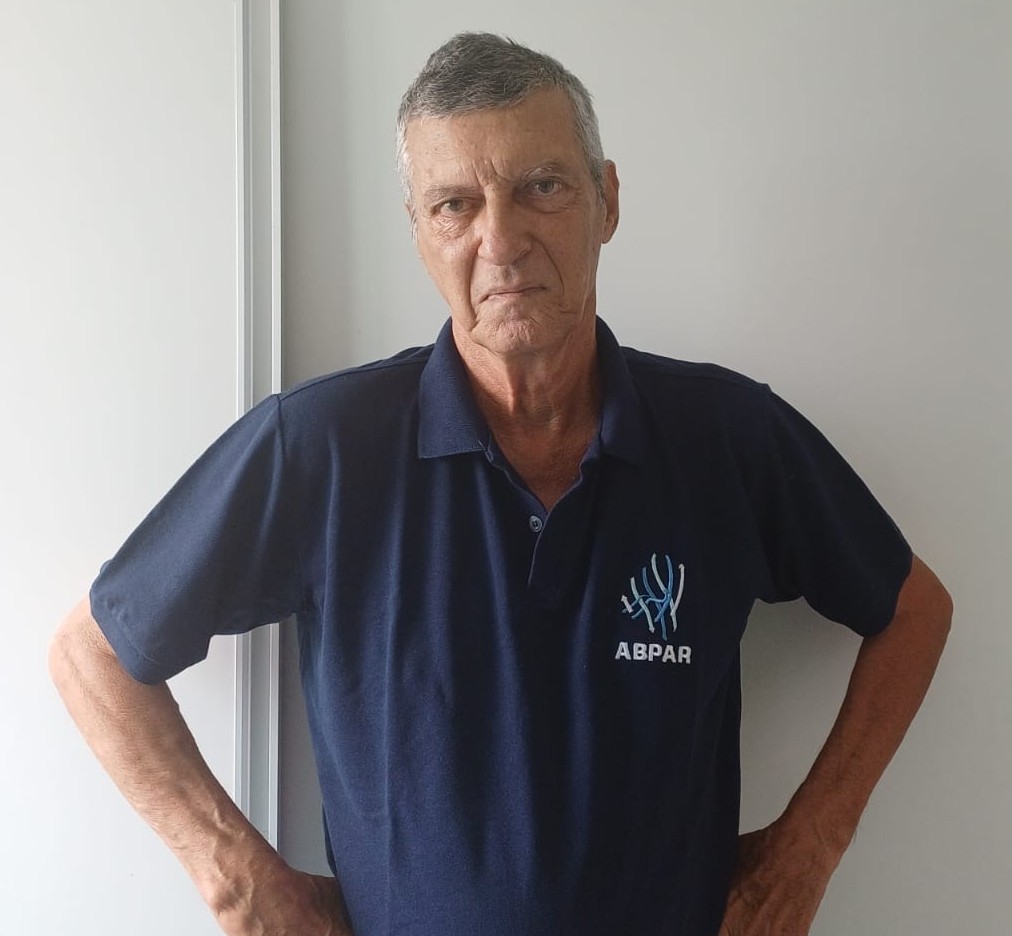
Jorge Luiz de Souza Neves
My name is Jorge Luiz. I am 69 years old, born in Rio de Janeiro, Brazil, and now living in Pernambuco. I am the third of six siblings; today, there are five of us, as my oldest brother lost his battle due to a lack of diagnosis.
Let me tell my story:
At first, I experienced numbness in my feet, fatigue, and loss of balance. Then the investigations began—endocrinologists, neurologists—for about five years, with the diagnosis being “severe polyneuropathy of the peripheral limbs.”
I asked: What can I do?
The answer: Learn to live with it, because it is degenerative and has no medication or cure—just adapt over time.
And so, the symptoms worsened to the point where I, a motorcyclist and industrial painting inspector, could no longer do my job. Then, in 2021, my mother-in-law suffered a stroke and was hospitalized for 10 days. My wife, who stayed with her in the hospital, met a neurologist in the ICU. While talking about my symptoms, the doctor mentioned that, given my older brother—who at the time was already in a wheelchair—and my late father, who had complained of similar symptoms, it could be **hereditary amyloidosis**. We had never even heard that word before.
She then referred us to another doctor who was researching this disease for her doctoral thesis, specifically on amyloidosis. That was the turning point after five years of uncertainty, diagnoses, and ineffective treatments.
After a genetic test came back positive for ATTR amyloidosis, Val30 (now called Val50) Met mutation, with neurological involvement, it was confirmed that among the six siblings, the three oldest—Julio (deceased, with untreated complications), Thereza (asymptomatic), and I—had the altered gene. The three youngest tested negative. Today, I also have four nephews with the same variant, though they are still asymptomatic.
I am now retired, unable to perform even simple tasks, and undergoing treatment that keeps the symptoms stable.
Today, I see that the greatest difficulty for us amyloidosis patients is that many doctors (neurologists, cardiologists, and others) are not familiar with or do not suspect amyloidosis based on its symptoms. As a result, they often recommend ineffective treatments that may even worsen the damage. In addition to the challenges of diagnosis and effective treatment, there is also the difficulty of accessing extremely expensive medications in Brazil. Most of the time, we depend on lengthy legal rulings, and there are frequent delays in receiving the medication.
Our great struggle is this: diagnoses that usually come too late, when nerve damage is already irreversible; treatments that are far too expensive, forcing us to rely on slow legal processes; and a lack of commitment and responsibility from the authorities.
Today, I do volunteer work with an association that supports other patients, offering guidance and helping them learn the best way to live with our illness. This fills my time and gives me a sense of purpose. I am also grateful, in a way, for the new friendships I’ve made and for realizing that, at times, my problem feels small compared to others. I am thankful for being able to wake up every day.
That is why I always repeat a phrase I once heard, which keeps me moving forward:
”LIFE GIVES US TWO CHOICES: THE FIRST IS TO SIT AND CRY, THE SECOND IS TO LIVE WITH WHAT WE HAVE LEFT IN THE BEST WAY POSSIBLE.”
And I chose the second.